
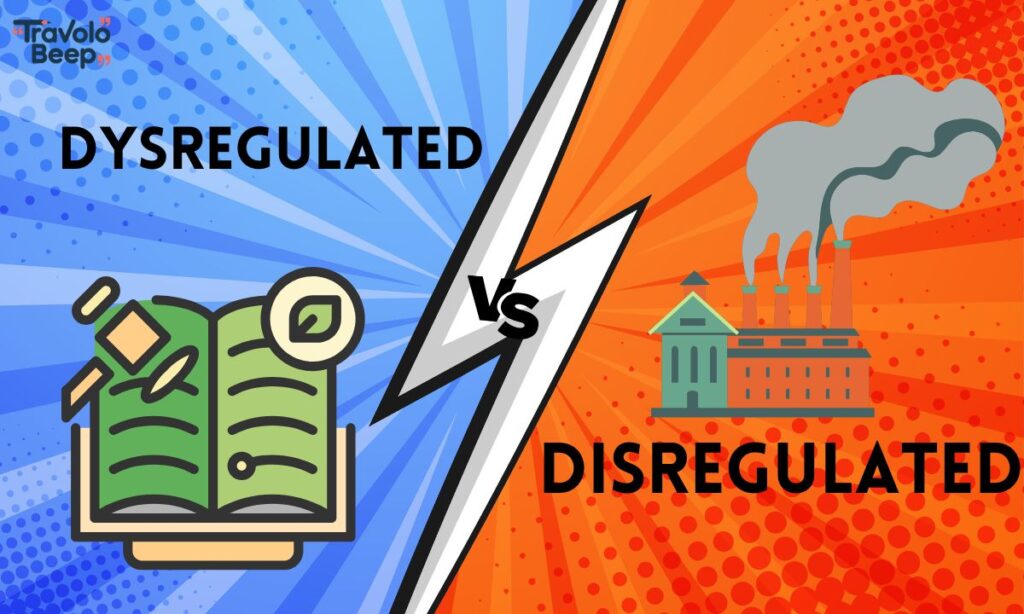

If you have ever paused mid sentence wondering whether you meant “dysregulated” or “disregulated,” you are not alone. These two words look almost identical, sound nearly the same when spoken quickly, and both seem to hint at something being out of control. Yet only one of them is actually a recognized part of standard English.
This mix up shows up everywhere: in therapy sessions, medical charts, classroom essays, and even casual conversations about stress and emotions. People often type one word into search engines while meaning the other, which only adds to the confusion.
In this guide, we will break down exactly what each word means, how they are connected, when to use them correctly, and which common mistakes to avoid. We will also walk through real world examples, exceptions to the general rule, and a few quick practice exercises so the difference truly sticks. By the end, you will be able to use these terms with total confidence, whether you are writing a clinical report, a school essay, or a personal blog post.
Search interest in this exact comparison has grown steadily as more people talk openly about mental health, emotional regulation, and nervous system health online. Terms like trauma, ADHD, anxiety, and nervous system dysregulation now appear constantly in everyday conversation, which means getting the spelling and usage right matters more than ever, both for clarity and for credibility.
Define Dysregulated
Dysregulated is a real, dictionary recognized adjective built from the prefix “dys-” (meaning abnormal, impaired, or difficult) combined with “regulated” (from the Latin “regulare,” meaning to control or direct). Put together, dysregulated describes a system, process, or behavior that is still functioning but is no longer functioning the way it should.
It is most commonly used in medical, psychological, and biological contexts. For example, a dysregulated immune system might attack healthy cells instead of protecting the body, and a dysregulated emotional response might cause someone to overreact to a minor stressor. The key idea behind dysregulated is impaired internal control, not a total absence of function.
This term appears frequently in clinical literature, therapy sessions, and academic psychology, especially when discussing conditions like ADHD, anxiety, trauma, and mood disorders. Major diagnostic manuals and peer reviewed journals rely on dysregulated as the standard, accepted word for describing these internal imbalances.
Think of it like a thermostat that has gone slightly haywire. The heating system still turns on and off, it still works in a technical sense, but it no longer responds to temperature changes the way it should. That is essentially what dysregulated describes: a system that is active, but not accurate. This is why the word shows up so often in discussions of the nervous system, hormone levels, and mood regulation, since all of these systems are designed to self correct, and dysregulation is what happens when that self correction breaks down.
Define Disregulated
Disregulated, on the other hand, is considered a non-standard or informal variant. It combines the prefix “dis-” (meaning not, or absence of) with “regulated.” While this construction might seem logical at first glance, since we already use similar patterns in words like “disconnected” or “disorganized,” most major dictionaries do not officially recognize disregulated as a standard English word.
That said, disregulated does show up occasionally in informal writing, casual conversation, and even some older or regional texts. When people use it, they typically mean something similar to dysregulated, or they intend to describe a system that lacks proper oversight or monitoring altogether. In some interpretations, disregulated leans closer to describing an absence of regulation rather than a malfunction within an existing regulatory system, similar to how “deregulated” describes industries with fewer government rules.
Because it is not widely accepted in formal English, disregulated is best avoided in professional, academic, or medical writing. If you are unsure which word fits your sentence, dysregulated is almost always the safer and more accurate choice.
It helps to think about why the confusion happens in the first place. English contains dozens of words that pair naturally with “dis-,” including disconnect, disorganize, and disengage, so it feels intuitive to assume “regulated” follows the same pattern. But “regulate” specifically pairs with the prefix “dys-” when describing impaired function, much like dysfunction or dysphoria. Recognizing this pattern makes it far easier to remember which word belongs where.
How To Properly Use Dysregulated & Disregulated In A Sentence
Knowing the definitions is only half the job. The real skill comes from applying these words correctly in real sentences, especially since one wrong letter can shift the meaning or credibility of your writing.
How To Use Dysregulated In A Sentence
Dysregulated works best when describing an internal system, whether biological, emotional, or behavioral, that has lost its normal ability to self regulate. It typically appears alongside nouns like emotions, behavior, immune response, blood sugar, or nervous system.
When using dysregulated, keep these guidelines in mind:
- Use it to describe something that was once functioning normally but has become imbalanced.
- Pair it with biological or psychological subjects such as hormones, mood, or metabolism.
- Avoid using it for things that were never regulated in the first place, since that calls for the word “unregulated” instead.
A simple test: if you can imagine a system trying to self correct but failing, dysregulated is likely the right word. Another helpful trick is to ask whether the subject of your sentence was ever functioning normally in the first place. If the answer is yes, and it has since lost that normal function, dysregulated fits. If the subject never had proper regulation to begin with, you are looking for unregulated instead.
How To Use Disregulated In A Sentence
Since disregulated is not a standard term, it should be used sparingly, if at all, in formal or professional writing. It occasionally appears in casual speech or informal blog posts where someone means either dysregulated or a general lack of oversight.
If you do encounter or choose to use disregulated, keep these points in mind:
- Recognize that most editors, publishers, and academic reviewers will flag it as an error.
- Understand that readers may interpret it as a simple misspelling of dysregulated.
- Reserve it, if at all, for very casual or conversational contexts, never clinical or academic ones.
In nearly every case, replacing disregulated with dysregulated will make your sentence clearer and more credible.
More Examples Of Dysregulated & Disregulated Used In Sentences
Seeing these words in action makes the distinction much easier to remember. Below are practical examples that reflect how each term is typically used across different fields.
Examples Of Using Dysregulated In A Sentence
- The therapist explained that the child’s dysregulated emotions were making it hard for him to calm down after school.
- Chronic stress can leave the nervous system dysregulated, increasing sensitivity to everyday triggers.
- Doctors identified a dysregulated immune response as the root cause of her autoimmune condition.
- Sleep deprivation often leaves people emotionally dysregulated the following day.
- The patient’s dysregulated blood sugar levels required immediate medical attention.
- His dysregulated behavior during the meeting surprised colleagues who had never seen him lose composure before.
Examples Of Using Disregulated In A Sentence
- Some informal writers describe a “disregulated” market when they actually mean deregulated or unregulated.
- In casual conversation, someone might say their sleep schedule feels “disregulated” when they mean dysregulated.
- Older texts occasionally use disregulated to describe a system lacking oversight, though this usage is uncommon today.
- A blog post might mistakenly refer to “disregulated” emotions instead of the correct term, dysregulated emotions.
Notice how nearly every disregulated example either corrects itself to dysregulated or points toward an entirely different word, like deregulated or unregulated.
Common Mistakes To Avoid
Even experienced writers slip up with these terms, especially because the words look so visually similar. Understanding the most frequent errors can help you sidestep them entirely.
Highlighting Common Mistakes
Some of the most common mistakes people make include:
- Using dysregulated and disregulated interchangeably, assuming they mean exactly the same thing.
- Applying dysregulated to something that was never regulated in the first place, when unregulated is the correct choice.
- Confusing dysregulated with the unrelated word disregarded, which simply means ignored.
- Assuming disregulated is an accepted variant simply because it appears occasionally online.
- Using disregulated in formal medical, academic, or professional documents.
| Common Mistake | Why It’s Wrong | Correct Alternative |
|---|---|---|
| “Emotions were disregulated” | Disregulated is non-standard | “Emotions were dysregulated” |
| “A never regulated drug is dysregulated” | Implies prior regulation that never existed | “The drug is unregulated” |
| “Dysregulated” confused with “disregarded” | Completely different meanings | Use context to distinguish them |
| “Disregulated” used in a medical report | Not recognized in clinical literature | “Dysregulated” |
Tips To Avoid These Mistakes

To keep your writing accurate and professional, try these simple strategies:
- Always double check the spelling before publishing, especially in medical, academic, or business writing.
- Remember that dysregulated relates to internal malfunction, while unregulated relates to something that was never controlled at all.
- Use a quick mental substitution test: if “malfunctioning” fits the sentence, dysregulated is correct.
- When in doubt, run the sentence through a dictionary or reliable grammar tool before finalizing your content.
- Read your sentence aloud. If it describes a system trying and failing to self correct, dysregulated is almost certainly the word you need.
Context Matters
Word choice rarely exists in a vacuum. The surrounding context of your sentence plays a major role in determining which term, if either, actually belongs there.
Dependent On Context
Dysregulated fits naturally into conversations about health, psychology, biology, and behavior. It shows up in therapy notes, medical charts, research papers, and everyday discussions about emotional wellbeing. Disregulated, when it appears at all, tends to surface in informal writing, casual speech, or occasionally older texts discussing a broader lack of oversight.
Understanding your audience and subject matter helps determine the right word almost every time. Clinical, academic, and professional settings call for dysregulated without exception.
It also helps to think about the difference between an internal system failing and an external framework being loosened. Dysregulated almost always points inward, toward hormones, emotions, immune responses, or nervous system activity. Disregulated, when it appears, tends to gesture outward, toward oversight, monitoring, or administrative control, which is really the territory of the word deregulated. Keeping this inward versus outward distinction in mind can help you choose the right word even when the sentence itself feels ambiguous.
Examples Of Different Contexts
- Medical context: “The patient presented with a dysregulated thyroid function requiring further testing.”
- Emotional or psychological context: “Trauma survivors often experience dysregulated stress responses long after the initial event.”
- Casual or informal context: “My whole sleep schedule feels disregulated after the time change,” though the technically correct word here would still be dysregulated.
- Policy or economic context: Some writers mistakenly reach for disregulated when they actually mean deregulated, as in loosened industry regulations.
Exceptions To The Rules
Language rarely follows perfectly rigid rules, and there are a few notable exceptions worth understanding when it comes to dysregulated and disregulated.
1. Medical Terminology
In clinical and medical writing, dysregulated is essentially the only accepted term. Physicians, researchers, and mental health professionals rely on it consistently to describe malfunctioning biological or psychological systems, and disregulated has virtually no presence in peer reviewed medical literature.
2. Regional Variations
While dysregulated is standard across both American and British English, disregulated occasionally appears in certain regional dialects or older, less formal texts. Even so, it remains widely considered non-standard rather than a recognized regional spelling variant.
3. Contextual Use
In rare cases, particularly informal or conversational writing, disregulated may appear as a stand in for a broader loss of oversight or control, closer in meaning to unregulated or deregulated. This usage remains uncommon and is generally discouraged in professional contexts.
4. Exceptions in Literature or Creative Writing
Fiction writers sometimes bend grammar rules intentionally for stylistic effect, character voice, or dialogue authenticity. A character might say “disregulated” in dialogue to reflect a particular speech pattern, education level, or regional background. In these creative cases, the deviation is a deliberate artistic choice rather than a grammatical error, and readers generally understand it as such within the flow of a story rather than as a factual claim about correct spelling.
Practice Exercises
Testing your understanding is one of the fastest ways to make these words stick. Try the following exercises before checking your answers.
Exercise 1: Fill in the Blank
- After weeks of poor sleep, her emotions became increasingly _______.
- The new drug entered the market as an _______ substance, since no formal oversight existed yet.
- His _______ nervous system made even small noises feel overwhelming.
- Some critics argued the industry had become too _______, though they likely meant deregulated.
(Answers: 1. dysregulated, 2. unregulated, 3. dysregulated, 4. disregulated or deregulated)
Exercise 2: Sentence Correction
Identify and correct the errors in the following sentences:
- “The child’s behavior was disregulated due to a stressful home environment.”
- “Doctors described her hormones as disregulated after the surgery.”
- “The therapist said his anxiety symptoms were dysregarded.”
(Corrected: 1. dysregulated, 2. dysregulated, 3. dysregulated is the intended meaning, not “dysregarded,” which is not a word at all)
Exercise 3: Match the Context
Match each sentence to the correct term, dysregulated or unregulated:
- A financial product with zero government oversight since its creation.
- A person struggling to manage anger after years of chronic stress.
- A bodily system that once functioned normally but now malfunctions under pressure.
(Answers: 1. unregulated, 2. dysregulated, 3. dysregulated)
You can also checkout this article as well Unenroll vs Disenroll: Meaning And Differences
Conclusion
Dysregulated and disregulated may look nearly identical, but only dysregulated holds a firm place in standard English, especially within medical, psychological, and academic writing. Disregulated remains a non-standard variant best avoided in formal contexts, while unregulated and deregulated cover the related ideas that disregulated is often mistakenly reaching for. Whenever you are describing a system, emotion, or process that has lost its normal balance, dysregulated is the word to trust. Keep this distinction in mind, run a quick mental check before you hit publish, and your writing will stay clear, accurate, and credible every time.