
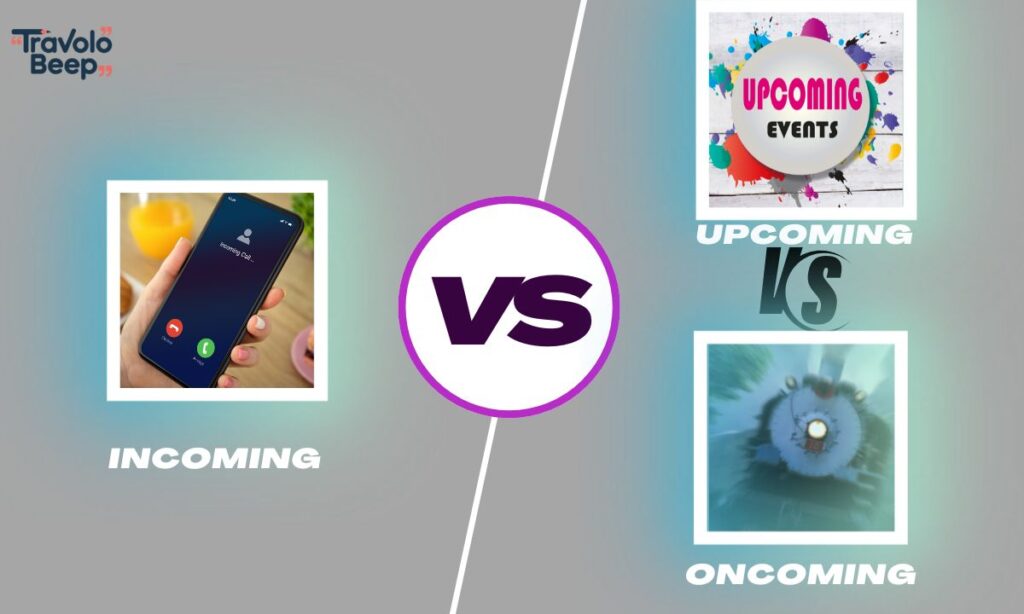

Three words. One shared idea of “something is coming.” Yet incoming, upcoming, and oncoming trip up even confident English speakers because they all point toward the future in slightly different ways. Mix them up in an email, a report, or casual chat, and your sentence can sound off, even if the meaning is technically understandable.
This guide clears up the confusion for good. You will learn what each word actually means, where it fits naturally, and how to pick the right one without pausing mid sentence to second guess yourself.
These words show up everywhere: text notifications, weather alerts, road signs, business emails, and school announcements. Because they sound alike and share a general “coming toward you” feeling, people often swap them without realizing the sentence has quietly changed meaning. A missed nuance here and there might seem small, but in professional writing, customer communication, or exam answers, precision matters. Getting these three words right instantly makes your writing sound more polished and native.
Understanding “Incoming”, “Upcoming”, and “Oncoming”
At first glance, these three words look like siblings. They share a root idea (movement or arrival) but differ in one key factor: direction, timing, or physical motion.
Here is the quick version before we go deeper:
- Incoming refers to something arriving now or very soon, often digitally or logistically.
- Upcoming refers to something scheduled for the future, with no physical movement involved.
- Oncoming refers to something physically approaching you, usually with urgency or risk.
Once you separate arrival, scheduling, and physical motion in your mind, the confusion disappears almost instantly.
Native speakers rarely think about grammar rules while talking, but they instinctively sense when one of these words feels wrong in a sentence. That instinct comes from years of exposure, not memorized definitions. The good news is you can build the same instinct much faster by studying the patterns below, rather than waiting years to absorb them naturally through conversation.
What “Incoming” Really Means
Definition of Incoming
Incoming describes something that is entering, arriving, or being received right now or in the very near future. It can apply to physical objects, but it also works perfectly for abstract or digital things like calls, messages, and data.
When You Use “Incoming”
Use incoming whenever something is actively heading toward a person, system, or place, and that arrival is close in time.
Tech & Communication
Phones, emails, and messaging apps rely heavily on this word. An incoming call, an incoming text, or incoming notifications all describe something reaching your device right now.
Deliveries & Logistics
Warehouses, airports, and shipping companies use incoming constantly. Incoming shipments, incoming flights, and incoming stock all describe items on their way to a destination.
Weather & Natural Forces
Meteorologists sometimes use incoming to describe fronts or systems approaching a region, especially when discussing timing rather than direct physical danger.
Emergencies & Warnings
Military and emergency contexts often use incoming as a short, urgent alert, signaling that something dangerous is arriving immediately.
Examples of Incoming
- She silenced her phone before the incoming call could interrupt the meeting.
- The airport reported several incoming flights delayed due to fog.
- Our support team handles hundreds of incoming tickets every day.
Key Insight
Incoming is flexible. It can describe something physical, like a package, or something invisible, like data. The common thread is arrival, not necessarily movement you can see.
What “Upcoming” Really Means

Definition of Upcoming
Upcoming describes something planned or expected in the future. There is no motion involved. It simply signals timing, usually tied to a calendar, schedule, or plan.
Practical Uses of “Upcoming”
Upcoming shows up constantly in marketing, education, and everyday planning. It works for events, releases, deadlines, and appointments that haven’t happened yet but are already on the radar.
Examples
- The upcoming product launch is scheduled for next month.
- Students are preparing for their upcoming final exams.
- Fans are excited about the artist’s upcoming album.
Typical Daily Uses
You will see upcoming attached to weddings, meetings, holidays, elections, concerts, and deadlines. Anything that sits on a calendar and hasn’t arrived yet is a strong candidate for this word.
Key Insight
Upcoming has no direction and no motion. Nothing is traveling toward you physically. It is purely about a point in time that hasn’t been reached yet.
What “Oncoming” Really Means
Definition of Oncoming
Oncoming describes something physically moving toward a person, vehicle, or location, often from the opposite direction. It carries a sense of immediacy, and frequently, a hint of danger.
Common Uses of “Oncoming”
This word rarely appears in digital or scheduling contexts. It almost always involves something you can see, feel, or physically encounter.
Traffic & Vehicles
This is by far the most common use. Oncoming traffic, an oncoming car, or an oncoming truck all describe vehicles approaching from the opposite direction on a road.
Danger & Physical Threats
Oncoming often pairs with warnings. People brace for an oncoming wave, an oncoming crowd, or even an oncoming attack in more dramatic contexts.
Weather
Storms, hurricanes, and floods are frequently described as oncoming when their physical approach is the focus, rather than simply their timing.
Examples
- The driver slowed down as an oncoming vehicle approached the curve.
- Villagers evacuated ahead of the oncoming flood.
- She stepped aside to avoid the oncoming cyclist.
Key Insight
Oncoming almost always involves visible, physical motion toward you. If nothing is moving in space, oncoming is the wrong choice.
Side-by-Side Comparison

Meaning Differences Table
| Word | Core Meaning | Involves Motion? | Common Contexts |
|---|---|---|---|
| Incoming | Arriving now or soon | Sometimes (physical or digital) | Calls, emails, flights, shipments |
| Upcoming | Scheduled for the future | No | Events, deadlines, releases |
| Oncoming | Physically approaching you | Yes, always | Traffic, storms, danger |
Best Word Choice by Scenario
| Scenario | Correct Word |
|---|---|
| A text message about to arrive | Incoming |
| A concert happening next month | Upcoming |
| A car approaching in the other lane | Oncoming |
| A new employee starting soon | Incoming |
| A scheduled exam next week | Upcoming |
| A storm visibly rolling toward the coast | Oncoming |
Why Context Matters
Choosing correctly comes down to answering three simple questions before you write the sentence.
1. Is it physically moving toward you?
If yes, oncoming is almost always the safest choice, especially with traffic, weather, or direct physical threats.
2. Is it arriving to your device, system, or location?
If the thing is being received, whether digital or logistical, incoming fits naturally.
3. Is it planned for the future?
If there is a date, a schedule, or an expectation with zero physical movement, upcoming is the right word.
Running through these three questions takes seconds, but it prevents almost every common mistake. Try applying this filter to a few random sentences from your own recent emails or texts. You will likely notice that most of your usage already leans correctly, and the filter simply confirms your instinct rather than overturning it. Over time, this three question habit becomes automatic, and you stop needing to consciously run through it at all.
Examples from Everyday Life
Incoming
- I have three incoming emails I haven’t read yet.
- The base picked up an incoming signal on radar.
- New incoming students will attend orientation on Monday.
Upcoming
- The upcoming holiday season means longer shipping times.
- We discussed the upcoming budget review during the call.
- Her upcoming novel releases in the spring.
Oncoming
- He flashed his headlights to warn the oncoming driver.
- The lifeguard spotted an oncoming rip current.
- Soldiers prepared for the oncoming assault.
Common Mistakes to Avoid
Using “oncoming” for events
An event like a meeting or wedding doesn’t physically move. Saying “the oncoming wedding” sounds unnatural. Use upcoming wedding instead.
Using “incoming” for scheduled things
A deadline or exam isn’t arriving in the sense of movement or delivery. “Incoming exam” reads oddly. Upcoming exam is correct.
Using “upcoming” for something happening now
Upcoming only applies to the future. If something is happening at this exact moment, use a present tense word like ongoing, not upcoming.
Using “oncoming” for digital stuff
Messages, calls, and emails don’t physically travel toward you through space. “Oncoming message” is incorrect. Stick with incoming message.
Using “incoming” for things that don’t move
Static, non arriving concepts, like a policy change or a birthday, generally work better with upcoming rather than incoming.
Easy Memory Tricks
1. Incoming = In-coming
Think of something coming in, like mail through a slot or a call through your phone.
2. Upcoming = Up next
Picture a calendar with a circled date. Nothing physically moves, it’s simply next in line.
3. Oncoming = On the way toward you
Imagine headlights coming straight at you on a dark road. That visual almost always signals oncoming.
4. The Car Rule
If cars, storms, or crowds are involved and heading your way, oncoming fits.
5. The Calendar Rule
If it’s written on a schedule and hasn’t happened yet, upcoming fits.
Case Studies
Case Study 1: The Weather App
A weather app alert reads, “Storm system approaching your area within six hours.” Here, both incoming and oncoming could apply depending on framing. If the app is emphasizing timing, incoming storm works. If it’s emphasizing visible movement across a radar map, oncoming storm feels more natural.
Case Study 2: A Company Announcement
A business newsletter states, “Our upcoming webinar covers new product features.” Since the webinar is scheduled and involves no physical motion, upcoming is the only correct fit here. Incoming or oncoming would confuse readers.
Case Study 3: Traffic Incident
A local news report explains that a cyclist swerved to avoid an oncoming vehicle that crossed into the wrong lane. Since a vehicle is physically approaching, oncoming is the precise and expected word choice.
Quotes to Help You Remember
“Incoming tells you something has almost arrived. Upcoming tells you something is on the calendar. Oncoming tells you something is heading your way right now.”
“If it moves toward you in space, it’s oncoming. If it moves toward you in time, it’s upcoming or incoming.”
You can also checkout this article as well Requester vs. Requestor: What’s the REAL Difference? (Updated 2K26) 🤔📚
Conclusion
Incoming, upcoming, and oncoming may look like close cousins, but each one serves a distinct purpose. Incoming signals arrival, upcoming signals future timing, and oncoming signals physical motion toward you. Keep those three ideas separate, and you’ll never second guess your word choice again.


