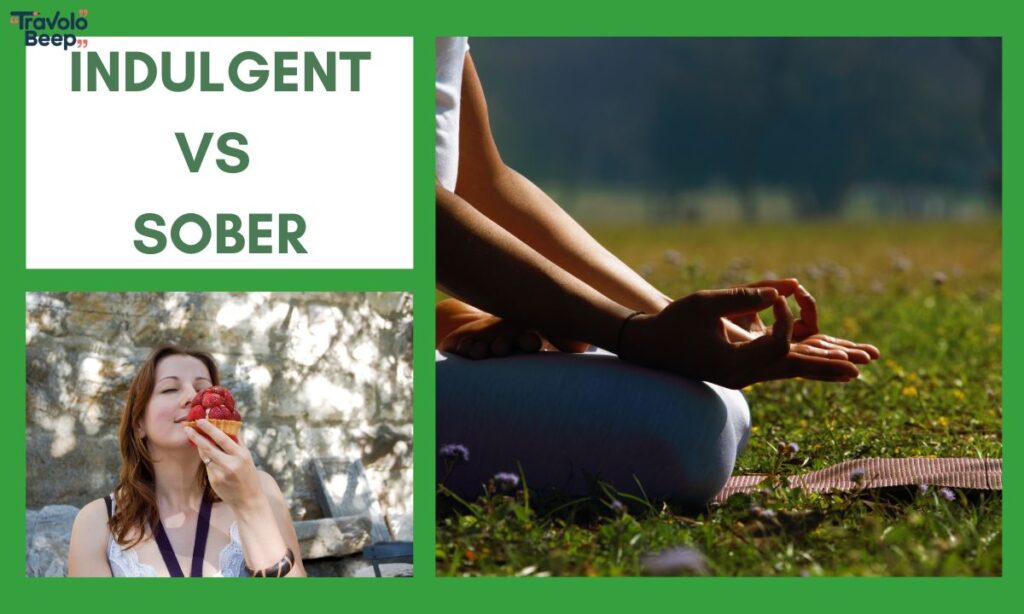

Have you ever paused mid sentence, unsure whether to call a quiet evening “sober” or whether a rich dessert truly counts as “indulgent”? You are not alone. These two words pop up constantly in conversations about lifestyle, parenting, food, and personality, yet many people use them without fully grasping how different their meanings actually are.
This guide breaks down the real difference between indulgent and sober, shows you exactly how to use each word correctly, and walks through practical examples so you never second guess yourself again. By the end, you will understand not just the dictionary definitions but the tone, context, and personality traits each word represents.
They sit at almost opposite ends of the same emotional spectrum. One leans toward pleasure and comfort, the other toward discipline and clarity. Mixing them up can flip the meaning you intended to send. A reader who sees “sober celebration” might expect a quiet, reflective gathering, while “indulgent celebration” promises something lavish and carefree. Knowing which word fits which moment is a small skill that pays off in clearer, more confident communication.
Indulgent
Indulgent describes behavior, a person, or a choice that leans toward pleasure, comfort, or leniency. When someone is indulgent, they are giving in to a desire, often without strict limits on how much is too much.
Think about a parent who lets their child stay up late watching movies and eat dessert before dinner. That parent is being indulgent. The word carries a sense of generosity mixed with a lack of firm boundaries. It is not always negative. Sometimes indulgent simply means treating yourself or someone else with extra care, warmth, or comfort.
In marketing and food writing, indulgent shows up everywhere. A chocolate cake described as “indulgent” sounds rich, decadent, and worth the calories. A spa day labeled “indulgent” promises relaxation without guilt. The word taps into emotion. It tells the reader they deserve a little extra pleasure.
At the same time, indulgent can describe a personality trait. An indulgent person tends to be lenient, easygoing, and quick to allow exceptions. This can be a strength in relationships, since indulgent people are often warm and accommodating. But taken too far, indulgence can slide into overindulgence, where moderation disappears entirely.
The word also carries a slightly different shade depending on whether it describes a person or an experience. Applied to a person, indulgent often hints at leniency toward others, like a teacher who lets deadlines slide. Applied to an experience or object, it usually points toward something rich or comforting, like a long nap on a weekday afternoon or a three course meal eaten purely for enjoyment.
Etymologically, indulgent traces back to the Latin word indulgere, meaning to be kind or to give free rein. That root explains why the word still carries a sense of generosity, even centuries later. Calling someone indulgent is rarely a harsh insult; more often it describes a soft, permissive quality that can be charming in small doses and problematic in large ones.
Sober
Sober means the opposite in almost every sense. At its most literal, sober describes someone who is not under the influence of alcohol or drugs. But the word stretches far beyond drinking habits.
In everyday language, sober also means serious, calm, restrained, or clear headed. A sober assessment of a situation is one based on facts and rational thinking rather than emotion or wishful thinking. A sober tone in writing feels measured and free of exaggeration.
Sober people are often associated with discipline, responsibility, and careful decision making. They think before they act. They avoid extremes. In personality discussions, a sober individual values practicality over spontaneity and restraint over excess.
Sober can also describe color, dress, or mood. A sober suit is plain and unflashy. A sober mood is subdued, sometimes touched by sadness or gravity. None of these meanings have anything to do with alcohol, yet they all share the same underlying idea: control, seriousness, and a lack of excess.
The word’s roots trace back to the Latin sobrius, which described someone moderate and not drunk. Over time, English speakers stretched that meaning to cover any measured, level headed behavior, not just abstaining from alcohol. That is why a sober analysis of market trends makes perfect sense, even though no one in that scenario has touched a drink. The common denominator is always a clear, undistracted mind making careful judgments.
In recovery and wellness communities, sober carries extra cultural weight. Being sober often signals an active, ongoing commitment to a substance free lifestyle, frequently tied to personal growth or a turning point in someone’s life story. This usage adds an emotional layer beyond simple description; it can represent resilience and hard won self control.
| Aspect | Indulgent | Sober |
|---|---|---|
| Core meaning | Yielding to pleasure or desire | Restrained, serious, or alcohol free |
| Tone | Warm, generous, sometimes excessive | Calm, measured, disciplined |
| Common use | Food, lifestyle, parenting, marketing | Behavior, mindset, writing tone, alcohol use |
| Personality link | Lenient, pleasure seeking | Practical, self controlled |
| Typical context | Treats, comfort, leniency | Decision making, discipline, clarity |
How To Properly Use The Words In A Sentence
Choosing the right word depends entirely on the message you want to send. If you are describing comfort, pleasure, or leniency, indulgent fits. If you are describing restraint, seriousness, or a clear mind, sober is the better choice.
A simple way to test your word choice is to ask yourself: does this sentence describe giving in to something enjoyable, or does it describe holding back and staying controlled? That question alone will point you toward the correct term almost every time.
It also helps to think about your audience and platform. A lifestyle blog, food review, or travel post naturally leans on indulgent language because the goal is to make the reader crave the experience. A financial report or medical summary leans on sober language because the goal is accuracy, not emotional appeal.
How To Use “Indulgent” In A Sentence
Indulgent typically appears before a noun, describing a person, action, or thing. It often pairs naturally with words like treat, parent, weekend, or dessert.
- Use it to describe food or experiences that feel luxurious or rich.
- Use it to describe a person who is lenient or generous to a fault.
- Use it when warmth, comfort, or pleasure is the central idea.
For example: “She planned an indulgent weekend filled with massages and fine dining.” Here, indulgent signals pampering and pleasure without any hint of restraint.
You can also place indulgent after a linking verb, as in “The dessert menu felt incredibly indulgent” or “His lifestyle has always been indulgent.” Both constructions still point back to comfort and excess, just with a different sentence shape.
How To Use “Sober” In A Sentence
Sober can function as an adjective describing a person’s state, a tone, or a mindset. It frequently appears after verbs like “remain,” “stay,” or “become.”
- Use it to describe someone free from alcohol or drugs.
- Use it to describe a serious, calm, or rational approach.
- Use it when discipline, clarity, or seriousness is the point you want to make.
For example: “He gave a sober assessment of the company’s financial troubles.” Here, sober signals seriousness and realistic thinking, with no connection to drinking at all.
Sober also works well as a verb base in the phrase “sober up,” which describes the process of moving from intoxication back to a clear minded state. Outside that specific phrase, sober almost always functions as a straightforward descriptive adjective.
More Examples Of Indulgent & Sober Used In Sentences
Seeing more examples in context makes it easier to internalize the difference. Below are several sentences for each word, covering different situations and tones.
Examples Of Using “Indulgent” In A Sentence
- The hotel offered an indulgent breakfast spread with pastries, fresh fruit, and champagne.
- Her grandmother was always indulgent, slipping the kids extra cookies before dinner.
- Taking a long bubble bath after a stressful week felt wonderfully indulgent.
- The brand markets its skincare line as an indulgent daily ritual.
- Critics called the film’s runtime self indulgent, stretching scenes far longer than necessary.
- He gave himself an indulgent hour of gaming before starting his homework.
Examples Of Using “Sober” In A Sentence
- After years of struggling with drinking, he has now been sober for three years.
- The judge delivered a sober warning about the consequences of repeated offenses.
- She kept a sober outlook even when everyone else celebrated too early.
- The committee gave a sober, fact based review of the proposed budget.
- His sober demeanor at the funeral matched the solemn occasion perfectly.
- They made the decision to stay sober throughout the entire road trip for safety.
Common Mistakes To Avoid
Even careful writers slip up with these two words. Here are the most frequent errors people make:
- Using “sober” to describe luxury or pleasure, when “indulgent” is the correct word for that meaning.
- Using “indulgent” to describe someone avoiding alcohol, when “sober” is the term that actually applies.
- Assuming “sober” only relates to drinking, and missing its broader meaning of seriousness or restraint.
- Confusing “indulgent” with “permissive,” which specifically refers to allowing freedom in rules or discipline, not general pleasure seeking.
- Overusing “indulgent” in professional writing where a more neutral or sober tone is expected.
Tips To Avoid These Mistakes
A few simple habits can prevent these mix ups for good.
- Picture the scene before choosing the word. Are people enjoying something rich or comforting? That points to indulgent. Are people being careful, serious, or alcohol free? That points to sober.
- Read the sentence aloud and ask whether it sounds like a treat or a warning. Indulgent sentences often sound like treats. Sober sentences often sound like warnings or calm statements of fact.
- Check the surrounding words. Indulgent often appears near terms like luxury, treat, pamper, or excess. Sober often appears near terms like discipline, clarity, restraint, or alcohol.
- When editing professional or academic writing, lean toward sober language unless you are specifically describing comfort or pleasure.
Context Matters
Context decides everything when it comes to indulgent and sober. The same general topic, like a weekend getaway or a parenting style, can be described with either word depending on what actually happened and what tone you want to convey.
A weekend filled with spa visits, wine tasting, and lazy mornings is indulgent. A weekend spent reflecting, journaling, and avoiding alcohol entirely is sober. Neither approach is better by default. The right word simply depends on what the situation calls for and how you want your audience to perceive it.
In parenting, an indulgent approach allows more freedom and fewer strict rules, while a sober approach to discipline focuses on structure, consequences, and careful guidance. In writing, an indulgent tone feels expressive and rich, while a sober tone feels factual and restrained. Matching your word choice to your intended tone keeps your writing accurate and credible.
Industry also shapes which word fits naturally. In hospitality and food media, indulgent is practically a default descriptor, used to sell everything from chocolate fondue to weekend brunch packages. In journalism, finance, and healthcare writing, sober is the preferred tone, since these fields value accuracy over emotional flourish. A skincare brand might describe its night cream as an “indulgent ritual,” while a doctor would never describe a diagnosis as indulgent. Recognizing these unwritten genre rules helps you sound like a natural writer in any field.
Exceptions To The Rules
Language rarely stays perfectly tidy, and these two words have a few exceptions worth knowing.
- “Self indulgent” often carries a negative tone, criticizing someone for excessive focus on their own pleasure, even outside of food or luxury contexts. A self indulgent essay, for instance, rambles about the writer’s own opinions without serving the reader.
- “Sober” can describe colors, clothing, or architecture that feel plain or understated, with zero connection to alcohol or emotional restraint.
- “Indulgent” can occasionally describe forgiveness or leniency in a legal or disciplinary sense, such as an indulgent ruling that reduces a penalty.
- “Sober” in the phrase “sober up” specifically refers to recovering from intoxication, a narrower and more literal use than the broader personality sense of the word.
Practice Exercises: Indulgent vs Sober
Test your understanding with these short exercises. Try to answer each one before checking your reasoning.
Exercise 1: Fill in the Blank
- After the long meeting, she gave a _______ summary of the quarter’s losses.
- He treated himself to an _______ slice of cheesecake after finishing the marathon.
- The driver stayed completely _______ before getting behind the wheel.
- Their honeymoon was full of _______ spa treatments and candlelit dinners.
- The professor’s tone remained _______ even while discussing a controversial topic.
Answers: 1. sober, 2. indulgent, 3. sober, 4. indulgent, 5. sober
Exercise 2: Sentence Writing
Write one original sentence using “indulgent” to describe a food experience, and one original sentence using “sober” to describe a person’s mindset during a difficult decision. Compare your sentences with the examples above to check whether your tone matches the intended meaning.
Exercise 3: Context Clues
Read each short scenario and decide which word fits best, then explain why in one sentence.
- A grandparent buys ice cream for the grandkids every single visit, regardless of the rules their parents set.
- A financial advisor calmly explains the risks of a investment without exaggerating the upside.
- A couple plans an entire vacation around fine dining, massages, and zero schedules.
- A team leader insists on reviewing every fact before making a major business decision.
For scenario one and three, indulgent fits because the focus is on pleasure and leniency. For scenario two and four, sober fits because the focus is on restraint and careful thinking.
You can also checkout this article aas well Less Then or Less Than – Which Is Correct? (Examples)
Conclusion & Key Takeaways
Indulgent and sober sit on opposite ends of the same spectrum. Indulgent points toward pleasure, comfort, and leniency, while sober points toward restraint, seriousness, and clear thinking. Neither word is inherently good or bad; the right choice always depends on context and tone.
Keep these key points in mind:
- Indulgent = pleasure, leniency, self gratification, often used for food, lifestyle, and personality.
- Sober = restraint, seriousness, clarity, used for alcohol free states, rational thinking, and disciplined tone.
- Context decides the correct word; the same situation can be described differently depending on the tone you want.
- Watch for exceptions like “self indulgent” and “sober up,” which carry slightly narrower meanings.
Once you internalize this contrast, choosing between indulgent and sober becomes second nature, and your writing will read with far more precision and confidence. The next time you sit down to describe a rich dessert, a calm decision, or a lenient parenting style, you will already know exactly which word belongs in the sentence.